Friday, March 1, 2013

Thursday, February 28, 2013

Biologists Are Not Monkeying Around With This New Discovery


                                                        http://www.aceshowbiz.com/images/still/chimpanzee-still01.jpg

Everyone knows that chimpanzees are one of the our closest animal cousins. However does anyone really know exactly how related we are to this species?  Scientists have recently discovered yet another similarity between humans and chimpanzees that is forcing them to think we have more in common with chimps than we could have ever imagined.

According to the article “Chimps Warn Their Unaware Friends of Dangers” by Dan Vergano of USA Today, a method of communication between humans and chimps has been discovered earlier this year. This method of communication is strangely human. Field biologists report that chimps are known to warn their unaware companions when danger is near, but new studies show that they do not bother warning other chimpanzees already aware of the dangers. This is said to be a “kind of cleverness once seen as unique to people.” Researchers are shocked that the chimpanzee is such a conscious animal. Not only are they conscious of the danger around them, but they are smart enough to notice if a companion has acknowledged the danger as well. 

An experiment was conducted to further support this evidence. Biologist Catherine Crockford monitored 33 different chimp’s reactions to fake snakes placed in their paths. The study showed that the chimps almost never voiced an alert to other chimps that had also seen the snakes, but they were twice as likely to warn other chimps oblivious to the danger.

The article states that, “Chimps do partly understand each others' intentions, a kind of awareness believed essential to language skills.” Scientists are very hopeful that this discovery will lead to a greater understanding of the relationship between humans and chimpanzees.

This article connects to biology because it is about the evolution of animals.  The article shows the ways in which humans and chimpanzees are similar. This article is also connected with biology because it shows how we evolved from chimpanzees. I learned by reading the article that because we evolved from the chimpanzee, we share many traits with them. I think it is important that we learn about our closest relative because in the process we can learn a lot about ourselves.

I think it is interesting that biologists are still finding new ways in which we are similar to other animals. There are many physical characteristics that we share with chimps, like our thumbs, but there are also mental characteristics that we share as well. After reading this article, the process of evolution became clear to me. 


Pharmaceuticals Affect Fish too!

There is a new study that shows that anti-anxiety drugs affect fish. Fish living in water with the anti-anxiety drug became bolder, less social and more active than unexposed fish. This drug also makes them eat faster than they would if they weren't on the drug. This is a huge problem because it the fish eat a lot more it could disrupt the food chain. People excrete drugs and flush unused pills down the toilet. Previous studies show that anti depressants could get in water and make the fishes reaction time slower and decreases their shelter seeking behavior. 

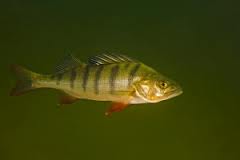
There is also a drug called oxazepam. Perch exposed to both low and high levels of oxazepam swam more, spent more time by themselves and ate a meal of zooplankton faster than unexposed fish. At a high dose, fish became more adventurous, entering a new tank more quickly than unexposed fish. Fish that are more solitary, are probably easy for predators to catch. And fish foraging at high rates may take meals away from other animals, altering the ecosystem.

This relates to biology class because we learned about bio-magnification and this is an example of it. The drug gets passed on and increases with each level it goes through. This also relates to Biology because we learned all about food webs and food chains and how one little thing can throw the whole food chain out of balance. The over eating affect will make big fish like bass eat a lot more little fish, causing the littler fish population to decrease.

What we can do to make sure this doesn't happen is we can try to decrease this is we can try to not flush pills down the toilet because when people do that they don't realize where the pills go. We could also make it so the sewage water doesn't go near the water where fish swim. This would separate the water with drugs and harmful chemicals from the water where fish can swim. So you have to be thinking this because soon it will matter and the aquatic food chain will be changing rapidly because of this. And that soon might not be to soon at all.


http://www.sciencenews.org/view/generic/id/348290/description/Antianxiety_drugs_affect_fish_too#sthash.9MnIFqsk.dpuf

Wednesday, February 27, 2013

Glowing Skin Attracts Pests: Not Just for Women


              In the article “Carnivorous Plants Glow to Attract Prey” by Mollie Bloudoff-Indelicato in Weird & Wild in National Geographic, posted on February 25, 2013, she talks about a recent discovery about glowing carnivorous plants. This article can be found at http://newswatch.nationalgeographic.com/2013/02/25/carnivorous-plants-glow/.This article was based off a study performed by Sabulal Baby. The actual study can be found at http://onlinelibrary.wiley.com/doi/10.1111/j.1438-8677.2012.00709.x/abstract.
              Carnivorous plants such as pitfall traps, flypaper traps, snap traps, and bladder traps have evolved to be able to catch live insects, and arthropods to supplement their poor diets due to nutrient deficient soil that they live in. They use bright colors, sweet nectars, and appetizing smells to attract their prey.
               According to scientist study author Sabulal Baby, a plant biologist at the Jawaharlal Nehru Tropical Botanic Garden and Research Institute in India, they have also evolved to make cells that help them generate an ultraviolet hue. Mr. Baby says “The fluorescents are a very important attractant of insects, arthropods, and small animals,” The ultraviolet light give off the same frequencies that the insects and arthropods associate with food sources, and as a result, more insects and arthropods are attracted to the plant.
            Small animals such as tree shrews and rats can also to the blue, ultraviolet light, so they go to drink the sweet nectar out of the plants. The animals then create fecal matter, which serves as extra nutrients for the plant.
            These glowing cells can be used for much scientific advancement. They could be used to track to spread of cancer cells, which could lead to a cure. They could definitely be used to attract insects to bug zappers, for pest control.


Clearly, the place where the most cells giving off the ultraviolet light are around the “mouth” of the plant. Naturally, this is where the plant wants the most insects and arthropods to be attracted too.


The relationship between the carnivorous plant and insects/arthropods is very odd in regards to the food chain. Normally, the plants are at the bottom of the food chain and the primary consumers are on the second level, just above the producers. Now, the producers are eating the primary consumers. This flip-flops things.
               Carnivorous plants don’t make a huge impact on the overall population of insects and arthropods. If everyone starts to use the glowing cells for pest control, the food web will be upset by the decrease of insect/arthropod population.
                These plants could be a safe, environment friendly way for insect control as opposed to pesticides. Pesticides can kill beneficial soil bacteria, earthworms, snails, frogs, birds, fish, honeybees, and other valuable species. They can “mess up” a food web as well. While the glowing pest control could harm the insect and arthropod population, pesticides can directly disrupt many more levels of the food web in an ecosystem.


Actual Study Sourcing
“Fluorescent prey traps in carnivorous plants”, Rajani Kurup, Anil J. Johnson, Sreethu Sankar, Abdul A. Hussain, Chellappan Sathish Kumar and Sabulal Baby, Plant Biology, early view article, February 2013

Tuesday, February 26, 2013

UV Ray Res-Q!


News Press

The article, “Lee Memorial Enlists Ultraviolet Light to Zap Tough Germs,” by Frank Gluck, talks about an experiment held at a Florida hospital.  Its goal was to test to see if ultraviolet light emitting machines would be beneficial.  Each machine has the capability of destroying the majority of diseases in a room.  The hospital was sent two of the machines in order to test it out.

Steve Streed states, “We’re doing anti-germ warfare.  We’ve had very few (germ) colonies that we’ve been able to recover from the rooms after we’ve treated them with this technology.”  This shows how successful the results of the experiment have been so far.  The machine is not intended to be a replacement cleaner, but rather a device to go back and zap away the remaining bacteria.    

The machines give off UV rays and damage the DNA in cells.  Without the DNA’s instructions the cells deteriorate.  We recently learned the importance of DNA in my Biology class.  It is the brain of the cell and contains all the genetic coding needed to sustain life.  UV light, when absorbed by the cell, causes mutations in it. This causes the DNA's proteins to alter and not work properly.  Since bacteria and germs are unicellular with one nucleotide of DNA, they grow weak when it fails and barely have a chance of surviving afterwards.   

I feel that the machines are a great tool to help save many lives from fatal diseases.  They can disinfect a room in minimal time and as a result keep the hospital patients safer.  It takes a machine around 30 minutes to disinfect an average sized room.  Also, the machines cost $30,000 apiece so they aren’t that available to everyone.  Even though the machines come with a big price tag, I think that this could actually make the hospitals want to use them more.  Knowing the large amount of money put in for them, dealing with the half hour of operating time would become more bearable.  Hopefully, if the ultraviolet light machines are not in a hospitals budget, they can be donated.  They are so important to have because the light can help to prevent infectious outbreaks in the future!     

Elephant Seal Scientists?

Jeff DeVito Honors Biology 2/26/13


Elephant Seal Scientists?


I found the article “Seals take scientists to Antarctic's Ocean Floor” by Paulaine Askin on NBCnews.com. In this article I read about how scientists placed sensor monitors on the heads of elephant seals and then the seals traveled to great depths in the Antarctic's waters that are inaccessible by humans even with the top technology. They have shown scientists “bottom water”. This happened very recently and the article was updated just this morning. Scientists are doing this so they can view the deepest depths of the Antarctic ocean and not risk lives of scientists in submarines that could be trapped under the ice. A scientist named Guy Williams"This is a particular form of Antarctic water called Antarctic bottom water production, one of the engines that drives ocean circulation, what we've done is found another piston in that engine." Basically from observing the Antarctic ocean through the sensor on the Seals head, scientists have figured out that makes ocean water circulate.


This made me think of biology class because we are always talking about research about animals but this is the opposite, this is research of the environment by using animals. I thought this article was very interesting because of how unique it was. I honestly believe it was a brilliant idea to do this. It is almost too simple to have worked as well as it did. "The seals went to an area of the coastline that no ship was ever going to get to," Other than going under water and helping them make observations about how ocean waters circulate, they went to places where ships would not make it past the ice and they learned about the land of Antarctica. So, because of a great idea of a scientist and a few seals, humans can now study an entire frontier more in depth.


click here to check out the link!

Monday, February 25, 2013

Mice: The Secret To Everlasting Youth

        Despite the benefits of living a long life, old age can herald increasing risk of a variety of terrible neurological diseases. Parkinson's and Alzheimer's disease happen as old brain cells deteriorate, leading to loss of memory, movement, and other functions. But it's possible that a cure might be found in the promising evidence of long-lived mouse cells.

A surprising experiment at the University of Pavia in Italy shows that mouse neurons will live twice as long as a mouse's regular lifespan when implanted into rat brains. Researchers transplanted neurons from mouse embryos into the brains of rat fetuses, tagging them with chemicals so that they would glow green under certain light. This helped them to distinguish the rat neurons from the mouse neurons, which, three years later, had developed into fully functional cells, though they were still smaller than rat neurons. These cells adapted to the rat brains without trouble. In a mouse's brain, these cells would only survive for 18 months before the mouse died. These cells, though, lived for the natural lifespan of the rat, which was about three years. In addition to adapting, they also showed the same signs of aging as the neighboring rat neurons. They'd essentially become rat neurons, instead of mouse neurons. 

"The findings suggest that long lives might not mean deteriorating brains. 'This could absolutely be true in other mammals — humans too,' says study author Lorenzo Magrassi, a neurosurgeon at the University of Pavia in Italy."

This study shows that neurons from different species can adapt perfectly if implanted into the brain, and that brain cells don't deteriorate due to age, but instead because of other factors. This is an important step in understanding diseases such as Alzheimer's. If we can determine what allows neurons to live so long, and what causes them to break down in ways that cause neurological diseases, steps can be taken towards preventing that breakdown. Cells in the body rely on many different systems to stay alive, but knowing what depends on what to live and function is the hard part. If it isn't the cell age that ruins neurons, it must be something else. Knowing that brain cells can adapt to new environments and function at the capacity of other species could mean that non-human neurons can be transplanted into humans in the future, to combat the effects of neurodegenerative diseases. One of the concepts brough up in the article is also the kdea that as our natural lifespan increases, so does the longevity of our cells. Brains don't run on a timer that spontaneously runs out, apparently, and they can work pretty well in other species. The cells themselves are pretty hardy, which just serves to raise more questions about the nature of diseases of the mind.


http://www.sciencenews.org/view/generic/id/348600/description/Mouse_brain_cells_live_long_and_prosper