Thursday, October 31, 2013

Save Penguins from Extinction!

http://www.diseaseproof.com/archives/green-living-greennews-wednesday-52709.html
African Penguins
http://www.diseaseproof.com/archives/gree
n-living-greennews-wednesday-52709.html

This blogpost was written on the article “A Penguin Species Faces Extinction” from the site Common Dreams, originally from The Boston Globe. Published by Derrick Z. Jackson on Tuesday, September 7, 2010.


“Honk Honk! hee-haw!” Most people do not know it but that is what sound most penguins make. In the article A Penguin Species Faces Extinction it talked about how many species of penguins are going extinct (10/18).


In particular it talked about the African Penguin (Spheniscus demersus). The African Penguin is a species of penguin, confined to southern African waters that is also known as the "Jackass" Penguin for its donkey-like bray.  


So why am I talking to you about Jackass Penguins? Well like most other flightless birds and a lot of other animals they are going extinct.  This mass extinction of a lot of animals is all because of the extra warmth on the planet.


In the article, a scientist named Trivelpiece said, “Think of a freezer, if it is at 30 degrees, you have ice cubes. If your freezer is at 33, you have water in your trays.” This analogy was really easy for me to understand. It shows how a little bit of warmth can be so dramatic.  


In Biology we learned that the extra amount of CO2 in the atmosphere is making the earth warmer.  This is caused by burning of Fossil Fuels and deforestation.


The African Penguin population has dropped by almost two-thirds in just over the last 8 years. Another statistic in the article was that from 1920 to 2010 the African Penguin decreased from 1,000,000+ to about 50,000

In the process of finding this article I found a site that you sign an online petition that says, “We ask Aker BioMarine to put a moritorium on krill fishing and give penguin populations time to recover.” Penguins and other animals depend on krill as a food source; but they are in danger because of the growing demand for health supplements and food for fish farms.  I thought that this would be really cool if  everyone could sign. You can do so at http://www.thepetitionsite.com/982/473/478/save-penguins-from-extinction/.

Article- https://www.commondreams.org/view/2010/09/07-2

Wednesday, October 30, 2013

Galapagos Sea Lions are in the Doghouse

                Would you ever think that seals could get disease from nearby dogs?  In the article Endangered Galapagos Sea Lions Are Threatened by Dog Disease by Jason Koebler, it explains how this could be an unfortunate possibility.  This situation concerns the Galapagos Seals the live on San Cristobal Island.  These seals ignore humans but they are attracted to the smell of the dogs that wander on the beach.  Since the Sea Lions are now regularly in contact with dogs, it is a possibility that the seals will come down with distemper, a disease carried by the dogs.  There are many new dogs that come to the islands which have not been checked for the disease.  Sadly, even though there are laws banning the importation of new dogs, they are not enforced.  “Galapagos Sea Lions are at a high risk for catching diseases that affect dogs, and a particularly bad outbreak could quickly spread throughout the population,” according to Patrick Brock, a biologist who spent 18 months studying sea lions on the Galapagos.  The Sea Lions are known to be in close quarters with each other and because of this, the disease can be easily spread and the population could suffer.
                Another issue being faced by the sea lions is scarcity of food.  When there is a shortage of food, the seals will usually travel long distances in search of prey and will have more interactions with humans and domestic animals.  At one point these seals were specified on the endangered list, not because of decrease in population, but because of the immense risk of food shortage and disease at the time period.  Presently, officials are working hard to keep seals and dogs apart.  The problem of the quickly increasing dog population leaves a possibility of an outbreak in a matter of time.
                Sea Lions are an important part of the marine food chain, they are near the top.  They also serve as an important population control mechanism for large bodied fish and an important food source for sharks. This topic relates to the topic of food chains and food webs that we have been learning about it class.  If this single organism was removed from the food chain there would be many negative effects regarding other organisms in the marine food chain.  Our ecosystem is extremely fragile and can be drastically changed even by the elimination of a single organism.  What I would like to know is if other animals could be at risk for similar situations.  I would also like to know if this will become a huge problem as the population of domestic animals continues to increase.

Fish Are Friends Not Food!


Have you ever thought about where the sushi on your plate came from? Or where the little fishies in your fish tank came form. Well now all of our aquatic friends are quickly disappearing because we are hunting to many of them. In the article Observing Wild Fisheries written by an anonymous author in 2012 on the Natural Resources Defense Council it describes how we are overfishing to much, polluting and destroying the habitats of many of our favorite fish like cod, tuna and snapper. In the article it says “Without swift action, ocean ecosystems will continue to deteriorate -- and so too will the sustenance, jobs, and recreational pleasures they provide.” If we don’t do something now the fish population will cease to exist.

This decrease in fish population will affect the ecosystem in the ocean extremely. The animals that eat these fish will die off because they have no food. Also the things that the fish eat like small sea creatures and sea plants will soon overpopulate. Not only will the decrease of fish influence the ecosystem in the ocean but it will also affect us. We will lose the food we get from fish, the jobs we get from fishing. Also when you go out fishing for fun it will not be so fun with no more fish in the water.

There is a way to fix this though. If we enforce laws and certain restrictions then soon the fish population will get bigger. It says in the article that the United States enforced laws and restrictions on fishing and in the past two decades they have seen lots of progress. Because of this rebuilding of the laws on fishing the amount of money earned from fishing has went up close to 30%.

 I found out that there are things I can do to save the fishes to. I can spread the word to people and making sure that our lawmakers abide by the laws set forth for fishing. I can also eat sustainably caught seafood.

In an article related to this piece it talks about seafood that should be eaten and seafood that should not be eaten. This article is the Sustainable Seafood Guide which is also on the same website as the other article. It says that seafood is good for you because it has lean protein, which has great health benefits. In science class we talked briefly about how fish can affect you. Also it says that fish can cause illness because it contains high amounts of mercury. Because lots of the large fish that we generally eat are decreasing in population you might consider eating seafood that is smaller like mackerel, sardines and squid.

In both articles it states that America has more laws on what fishes you can catch and the way you do things. American fish is usually better to buy since America has stricter fishing laws that other parts of the world. Another big thing to look out for when looking for fish to eat is learn how it was fished. When it is fished with a hook the fisherman can throw things back and it does not disrupt the ocean floor. In the other way they use huge nets that drag and may disrupt large areas of organism. Also it catches unwanted sea creatures that are not needed and are just put to waste. Something really interesting that I read was that you should look for specific packaging. You should get seafood that is in flexible pouches because it is more environmentally friendly. That is it for now but remember fish are friends not food. 

Who Wants to Drink Polluted Water?

The article by The New York Times called Spill in China Underlines Environmental Concerns is about a chemical spill. This chemical spill had taken place at a fertilizer factory upstream located in Handan, China. This spill had forced them to shut off the tape water, which sent residents into a scramble for bottled water. This spill occurred on December 31st and affected a handful of cities and more than 28 villages. The officials were irritated because the spill hadn’t been recorded until 5 days after it occurred. This spill brought attention to the growing problems with the water use and pollution in Northern China. The region had suffered from a drought for decades and doesn’t agree with how industrial companies should operate along rivers. Yin Qingli, a lawyer in Handan that filed a lawsuit in January against Tianji said, “Problems with water weren’t so serious before, but they have become much worse with industrial consumption.” Tianji is another fertilizer factory which uses water to convert coal to fertilizer.

In 2009, the water source had bacteria in it so we had to shut down all the tape water. Everyone was panicking and running to the store to buy bottled water. In this case though we were informed about the water problem right away and it was addressed right away.


In biology, we are learning briefly about some bacteria and a lot of bacteria are located in water. There is controversy over whether there should be factories, factories harming the environment, along or close to water sources. I think there should not be. The chance that the water will be contaminated is very high and it isn’t worth the risk.  

Living in Fog


    We have all heard that air pollution is a big problem, but Beijing China takes it to a whole new level.  Air pollution in Beijing China is at a dangerously high level because of the immense factories burning coal. The article China’s Plan to Curb Air Pollution Sets Limits on Coal Use and Vehicles by Edward Wong, published September 12th 2013 describes this problem and what China’s ways are to approach it. In China “the concentration of fine particulate matter in Beijing reached 40 times the exposure limit recommended by the World Health Organization.” This problem is spinning out of control and China needs to find a way to decrease it.


    There are a lot of ‘coal-dependent’ industries in Chinas industrial structure. These factories burn a large amount of coal and release the waste back into the air, making the air think and hard to see, almost looking like a foggy day. China burns half of the coal consumed in the world, which means China produces a lot of air pollution that is very harmful to not only the people who live there but the environment.


   The Chinese have a lot of talks and debates about this topic but nothing seems to actually get done. What it seems the decision is to take high polluting vehicles off the roads and limit the burning of coal. The plan is that by 2017 all high pollutant vehicles are to be off the roads. So far this is the only major documented action China has taken.  


   I believe that this is a very weak idea to help solve this crisis. Vehicles are not the main source to this problem, and getting rid of them would only help very little. The big source of air pollution is the factories in China.  Chinese official should have spent more time focusing on what to do with the factories instead of worrying about pointless vehicles.


    The author of this article seems to have a similar view as mine. Wong uses quotes from another people and organizations in his article that ridicule Chinas way of handling this matter. There is no positive reinforcement, no “Hey good job for trying China!” type of attitude but mostly hint at how China is not taking this seriously enough.  I completely agree with Wong.


Reading this article and learning about the extent of Chinas air pollution made me immediately think about the movie The Lorax we have watched in biology class. In the movie the Onceler comes into a beautiful forest and sets up factories. As the number and size of factories grows so does the pollution. Soon the sky has turned a permit gray with thick fog instead of the once clear blue sky.  The polluted sky in the movie looks very similar to the ones in China.

   Chinas air problem also reminds me of other movies. In a movie, after there is a big explosion or a city is destroyed the air is all cloudy with debris flying everywhere. This image is what some places in China look like. The air is very thick with pollution that you can barely see.


   All in all China is in a big predicament.  Air pollution is at a very unhealthy level and people’s lives are in jeopardy. China claims to be constantly taking about this issue but they have only taken basic actions. I believe that China needs to look more deeply into where most of the coal burning pollution is coming from (the factories) and try to decrease it at the core. They need to realize that their air pollution is not just affecting China but the rest of the environment.


Has the Bay Lost Hope?

The article can be found at   http://www.cbf.org/how-we-save-the-bay/issues/dead-zones/nitrogen-phosphorus


The Chesapeake Bay. Was full of life now the question is how can we save the lives that are there and bring in new lives? The article was written by the Chesapeake Bay Foundation and says what is wrong with the bay and how it can be fixed.  There is too much phosphates and nitrogen in the water from pollution, from many different things about 300 million pounds of these polluting nitrogen go into the water each year. Which in turn is causes surplus of algae and is killing the animals and plants in the water. Also the bay is dangerous for humans or animals to be in because of all of the waste and toxins in it. This is causing a circle effect that needs to be fixed, fast.

The high levels of phosphates and nitrogen comes from the run offs of agriculture like fertilizer or manure (40% of nitrogen all of the nitrogen pollution in the bay and 50% of  all phosphorus pollution in the bay) . When these get into the water they give the algae food to bloom. With this excess amount of nitrogen and phosphates in the water it causes a blooming ground for a surplus of algae to bloom. The algae are very detrimental to this bay's habitat. The algae block the sunlight from making it to the sea floor which in turn cause the plants in the water to die from not getting enough sunlight. Then when the algae die and decompose they suck up oxygen from the water resulting in so called "Dead Zones". Dead Zones are areas in the water were there is little or no oxygen, this stresses the fish and shellfish in the water resulting in them dying. Plus there are strands of poisonous algae like blue algae that are very dangerous and detrimental to animals or humans. They can make humans sick but they are very dangerous to animals like dogs. The toxins attack the animal's liver and nervous system eventually causing the animal to die. Algae like this make the water's of the bay even more dangerous, disgusting, and inhabitable.

Agriculture isn't the only factor into the bay's issues. Storm water, Sewage/Industry, Septic, Air Pollution, and Storm Water are the other factors that are polluting the bay. These factors also effect the bay majorly. These combined make up the other 60% of the nitrogen pollution and 50% of the phosphorus pollution. These factors remind me of the Lorax.  In the Lorax the town was throwing all of the polluted water into the lake were all of the fish were and from this all of the fish died off. Thats almost like the Sewage/Industry water that they put in the bay or the run offs of fertilizer and manure that go into the bay because the cows poop close to or in the water causing it to contaminate. This also reminds me of the Lorax with the air pollution from the factories or the cars and machines that they used in the movie that contaminated the environment. The same thing is happening with the bay where the factories and cars around it contaminate the water.

There are ways to fix this disaster in the Chesapeake Bay. The agricultural pollution can be fixed by just farmers corroborating. The farmer's can fence in their cattle so that they won't get close to the bay and pollute it with their manure. The farmers can plant cover crops (plants that maintain the soil's fertility and quality. They also can also manage water from seeping into the soil so that that won't later contaminate the bay.), the farmers can plant buffer strips to keep the water runoffs from the fertilizer away from the bay, and they can limit the amount of fertilizer use so that not so much will run off and get into the bay. Just by doing this it can cut out 40% of the nitrogen in the water and 50% of the phosphates in the water. These measures can definitely help save the bay.

The other pollutants (Sewage/Industry, Septic, Air Pollution, and Storm water) can be reduced by doing these things. The factories around the bay can upgrade storm water systems and sewage treatment plants. The factories around the bay can also use nitrogen removal technologies on septic systems and reduce air pollution by reducing energy use from power plants and vehicle pollutions. By taking these measures and the agricultural measures the bay's pollutions can drop by a large margin.

By doing all of these things the bay can be saved. But there is some important numbers to think of 98% and 80%. These are the percentage of oysters and seagrass that have been killed since the pollution in the bay has started. This is very concerning numbers since we already know from class that if one species dies off in a food chain, everything can die off as well. This is already starting to happen in the bay. And if we don't manage to stop these pollutions soon the bay and all of it's inhabitants can die off and the entire bay can become one big dead zone of just death, sludge and pollution. But if we work together and try to fix the hole that has been dug in the pollution of the bay. Maybe someday people can go back swimming everywhere in the bay and life will flourish in the bay. Or it can stay the same as it is now staying on Environmental Protection Agency's list of dirty waters and eventually get worse and worse. But this can be stopped and fixed, if we just work hard to do so. The bay still has hope, let's fix it while it still has hope and an opportunity for to be fixed.


Tuesday, October 29, 2013

Chickens and Super-viruses: Not a Dumb 80's Movie


Chickens and Superviruses: Not a Dumb 80’s Movie

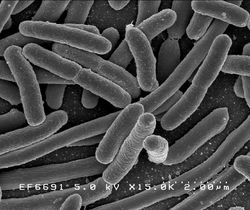
This writing piece is written on the article “How Your Chicken Dinner is Creating a Drug-Resistant Superbug” from the site The Atlantic, a popular news website and magazine. It was written by Maryn McKenna with the hope that word will spread about the theory which is being developed about a recent strain of drug-resistant urinary tract infections in women. “But the origin of these newly resistant E. coli has been a mystery -- except to a small group of researchers in several countries. They contend there is persuasive evidence that the bacteria are coming from poultry.” This quote from the article effectively sums up the problem which was been giving women some moderately serious problems within the past few years. http://m.theatlantic.com/health/archive/2012/07/how-your-chicken-dinner-is-creating-a-drug-resistant-superbug/259700/

When Christopher Columbus first came to America, the most effective weapon he had against the natives who lived here was one that he brought unintentionally. He accidentally brought several different deadly diseases with him to the New World, the worst of which being smallpox. As the natives had no immunity or effective treatments for the virus, many were wiped out or became deathly ill. But why were the Europeans immune to the virus? To answer this, we look to Europe’s past, which had many dark times involving disease and the plague. But what set Europe apart from the rest of the world and made them bear the brunt of all deadly diseases for the world? The answer- domesticated animals. Spending large amounts of time living, spending time with, and eating domesticated animals can lead to the development of ghastly diseases, something which wasn’t really relevant until recently. Although this is a topic which I recently discussed in my history class (i.e. yesterday), this fact has a usefulness which can be applied to modern-day problems. In the last few years, a spike in UTIs in women can be traced back to one major culprit- chickens.

When Adrienne LeBouef went to her doctor, Dr. Jehan El-Bayoumi, she knew she had a UTI in her system by the burning and the urge to go to the bathroom. What she did not know, however, was that she was one of many women (and men), who, within the past few years, have been excellent examples of the growing problem of antibiotic-resistant E.coli strain.
Now we must ask ourselves, what is causing the bacteria to become resistant to the treatment? We look to an in-class discussion had by my very own biology class several weeks ago.

We discussed how bacteria such as some strains of Staphylococcus were eradicated by the accidental discovery of penicillin, while in the present day, some have become completely immune to the fungus. The answer to this inquisition- evolution. Since we have been battling E. Coli for so long with the same types of antibiotics and treatments, it has been able to develop its own natural defenses to stay alive.

I think it is nearly impossible for one to question the validity of this article, however absurd the title of it may be. We in the science world should have expected that, although we had the E. Coli problem under control for some period of time, it would eventually adapt to the problem it was faced with. We look to Werner Heisenberg’s “Uncertainty Principle,” which has, more recently, developed into what is referred to as the “Observer Effect.” It states that the act of observation and subtle experimentation will, even if the subject is unaware that it is being observed, change the actions and decisions of the subject.

This very much applies to the recent problem with the E. Coli bacteria, as it has changed as a result of many observations and experiments over the years. When this particular strain of E. Coli was analyzed, it was discovered that it is a form of what is commonly known as ExPEC (extraintestinal pathogenic E. Coli), an evolved form of E. Coli which spreads to and infects other parts of the body aside from the gut, including the urinary tract. When chickens are killed for food, some of the helpful (helpful for digesting, that is) E. Coli in the gut attach to the meat, and when humans eat this, it becomes a bacterial infection when it does not stay in the gut as it is supposed to.

The next time you eat chicken, or any processed meat, make sure you know the quality of the meat, as well as the way it was produced, and how the animal was raised and slaughtered. These important things to note may save you immense discomfort and future problems as the advanced E. Coli strain spreads. If we raise awareness of this (by doing something as simple as sharing this highly informative and descriptive article with friends) we can stop a major issue before it affects the population at large.

Escherichia Coli (E. Coli)
Image from Wolfram Alpha